Careers Blog
From quick stop to career destination: How an opportunity became a calling for Brando H.
Share
Related posts
Related Posts


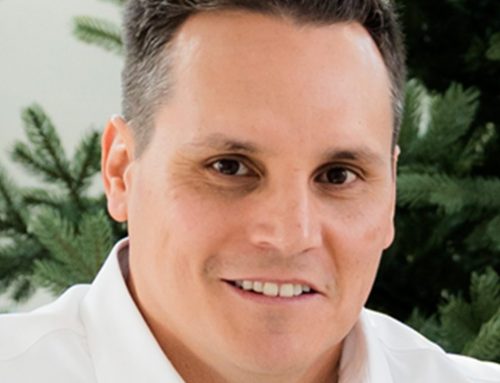






Brando H. joined Vanguard with a two-year plan—but nearly two decades later, he’s still growing, learning, and shaping innovation as a domain architect. Keep reading to discover how Brando turned short-term goals into a long-term career.
Short-term goals: Long-term impact
When I joined Vanguard, my original plan was to spend two years here and then move on to another role, assuming I’d be ready for something new. What I didn’t understand was the power of Vanguard’s mission and ownership structure.
After 17 years—and so many different roles at Vanguard—knowing that my work helps give people a fair chance at saving for a house, their child’s education, or retirement without having their gains eaten up by fees is what keeps me coming back for more.
Discovering purpose and driving innovation
When I started, I never imagined what financial services could look like when profits and client success work hand in hand. That alignment gives my role as a domain architect a true sense of purpose.
I began my career at Vanguard in Workplace Solutions, developing the Participant Experience website—the same place I regularly checked the balance of my own Vanguard retirement plan from a previous employer. At the time, I had zero financial acumen, but working here helped me learn how to save for retirement properly and appreciate the impact of what we build.
Over time, I grew into a technical lead role, introducing continuous integration across many Workplace Solutions applications. I enjoyed adopting new technology so much that I moved to the Chief Technology Office (CTO) as a project manager, and later as an architect for the team that moved Vanguard to a continuous delivery pipeline. I also spent a few years working in Vanguard’s Innovation Studio experimenting with new business ideas.
After a brief time in the CTO’s Developer Experience group, which ended last year, I moved to the DevSecOps team to start a new chapter while still helping improve software development at Vanguard. Currently, I focus on improving the Developer Experience with DevSecOps tooling and more broadly, the client experience of Enterprise Security & Fraud’s (ES&F) collective information technology-facing processes.
Where skill meets strategy
Tackling complex projects takes more than technical knowledge—it requires a blend of various skills. For me, that means drawing on first-hand client experience, understanding Vanguard’s platforms and processes, applying product and project management best practices, and leveraging software architecture expertise.
Those capabilities came together during one of my most challenging—and rewarding—initiatives: joining a team in the final stages of redesigning and launching version 2.0 of our scanning tools. While the team had already made significant progress, my role was to help ensure the solution was scalable and resilient—applying my CTO platform knowledge to support the delivery and make its launch a success.
We reimagined the experience around GitHub pull requests, giving developers more flexibility to test and build incrementally before addressing security findings. This shift required a major operational change, strengthening performance testing, incident response, and adding resilience throughout the pipeline. Getting 2.0 out of the door was a wild ride, and we’re excited to keep improving from here!
The people and purpose that keep me inspired
One of my favorite parts of my job is the people. I am part of an organization of folks who are all a true pleasure to work with. This has been an ongoing theme in my time at Vanguard.
I’m also lucky to have had many mentors throughout my career, some who I still regularly connect with. I try to pay this forward by mentoring others as they decide what’s next, or to seek out ways to improve their skills.
Seizing the chance to learn and grow
I’ve held many different titles and worked for many different parts of Vanguard over 17 years. Vanguard even helped me prepare and pay for both my master’s degree and my CISSP (Certified Information Systems Security Professional) certification. I love that I can learn new things and change my job entirely without having to enter the job market and risk a regular paycheck to do it.
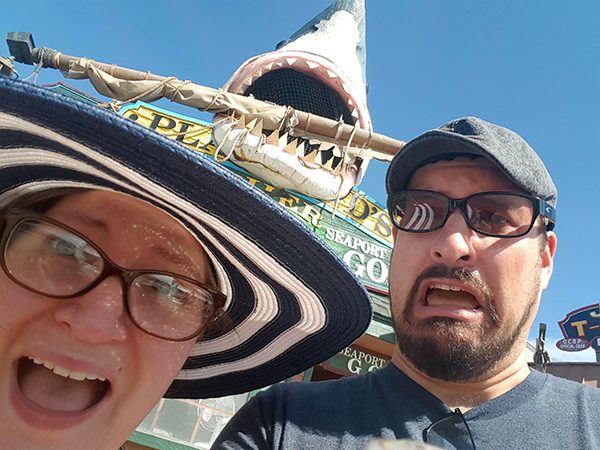
For me, balancing work and life starts with flexibility. With a team spread across multiple geographies, remote work is just as effective as being in the office. It gives me the freedom to occasionally manage late nights from home, spend time with my wife and dog, and handle everyday tasks without stress. By combining strong time management with digital wellbeing tools, I’m able to stay focused and keep work and life in balance—without needing to be in the office all day.
-Brando H.